Whatsapp: +86 15001050898 Email : collin@runingpower.com / daisy@runingpower.com

The Lithium Battery Industry Has a New Driver — and It‘s Not EVs
If you follow the lithium battery industry, you’ve probably noticed the numbers keep getting bigger.
But the real story of 2026 isn‘t just about growth — it’s about a fundamental shift in where that growth is coming from.
For years, electric vehicles were the undisputed engine of the lithium battery market. In 2026, that’s no longer true.


The Numbers That Tell the Story
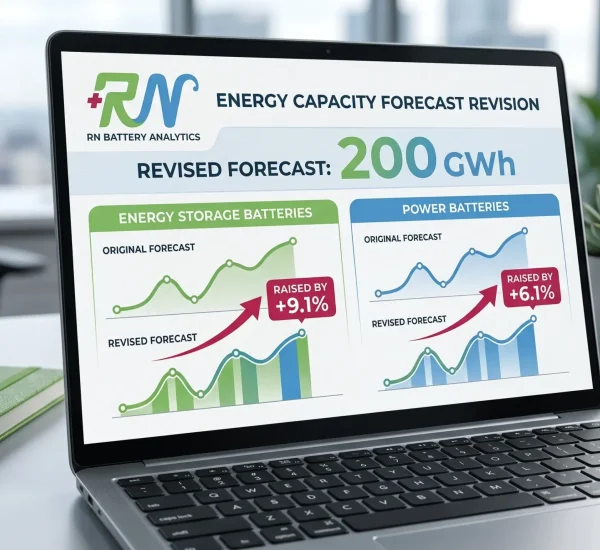
Let’s start with the headline. In early August, Xinlun Information raised its full-year 2026 global lithium battery output forecast by 200 GWh — from 3,000 GWh to 3,200 GWh.
A 200 GWh revision isn’t a minor adjustment. It’s equivalent to adding two-thirds of the entire global lithium battery market from 2021, all in one forecast update.
200 GWh Revision Breakdown
But the more interesting question is: where did that 200 GWh go?
- Energy storage batteries: raised from 1,100 GWh to 1,200 GWh — an increase of 9.1%
- Power batteries (EVs): raised from 1,790 GWh to 1,900 GWh — an increase of 6.1%
The absolute numbers look similar — 100 GWh for energy storage, 110 GWh for power batteries. But the growth rate tells a different story. Storage is growing faster, off a smaller base.
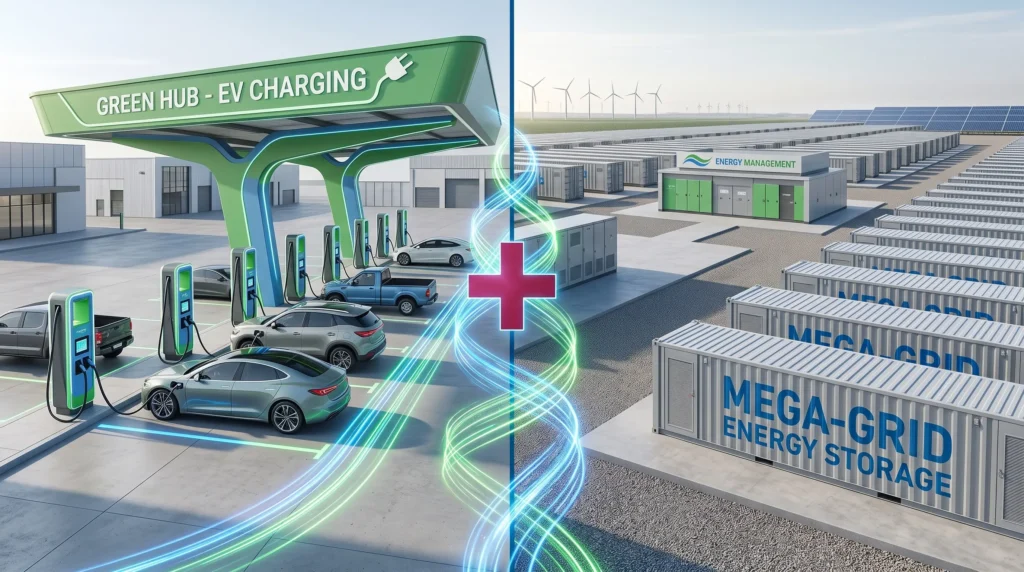
To put it simply: energy storage is the new growth engine.
📊 Data source: Shanghai Securities News citing Xinlun Information, August 6, 2026
Internal link: Explore Runing Power’s energy storage solutions →
External reference: Shanghai Securities News (nofollow)

The Storage Market Is Accelerating Faster Than Anyone Expected
The monthly production data confirms the trend.
In August 2026, China’s total lithium battery production scheduling (energy storage + power + consumer) is expected to reach 304 GWh, up 7.4% month-over-month. Globally, that number is 317 GWh, up 7.1%.
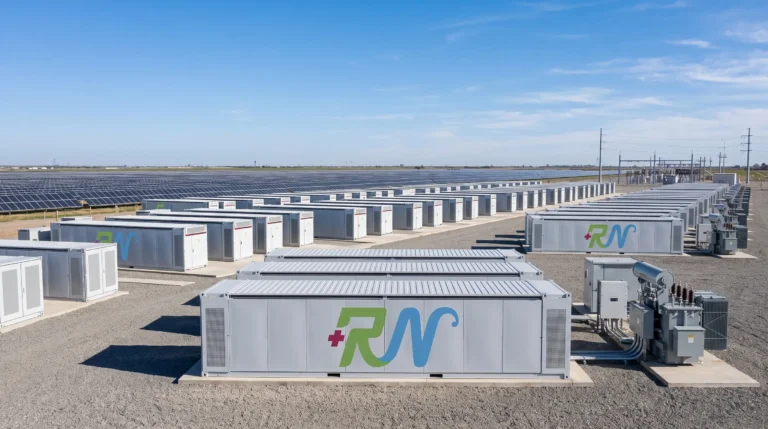
Within that, China’s energy storage cell production alone is expected to hit 125 GWh — about 41% of total production — with a month-over-month increase of approximately 10 GWh.
The growth is being driven primarily by overseas large-scale storage projects, especially from the US and the Middle East.
Global Storage Projections
And the trend shows no signs of slowing. The global energy storage market is projected to reach 480 GWh in 2026 and 630 GWh in 2027, representing roughly 50% and 30% annual growth respectively.
Just to give you a sense of the scale: in the first half of 2026 alone, global lithium battery ESS shipments reached 461.3 GWh, up 71% from 269.7 GWh in the same period last year.
📊 Data source: Dadong Times Think Tank, Eastmoney, China Galaxy Securities, Metal.com
Internal link: Learn about Runing Power’s backup power solutions →
External reference: Eastmoney (nofollow)
The New Economics of the Battery Industry
Storage is growing faster than EVs for a simple reason: the economics work differently.
A utility-scale storage project doesn’t care about weight. It doesn’t care about range anxiety. It cares about cost per cycle, safety, and long-term reliability.
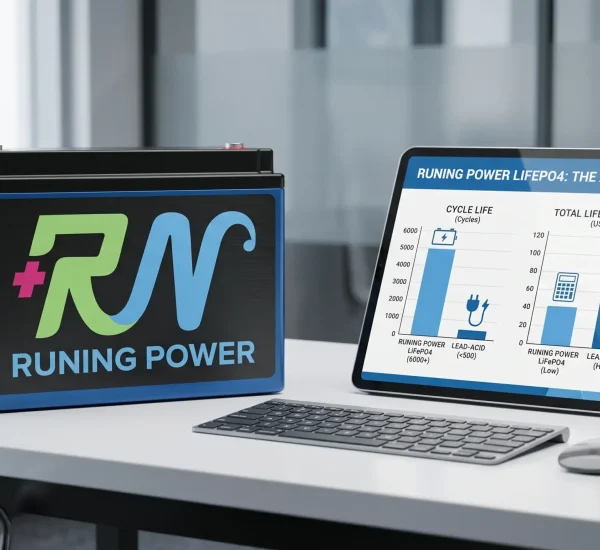
LiFePO₄ batteries — the chemistry Runing Power specializes in — are the clear winner in storage applications. They offer:
- Lower cost per cycle than NMC
- Inherent thermal stability — no fire risk
- Longer calendar life — many storage projects expect 15-20 years of operation
- Abundant raw materials — no cobalt, no nickel supply chain risks
Key takeaway: For industrial buyers, the market forces driving LiFePO₄ prices down are only getting stronger. As storage scales, so does the production volume of LFP cells, which benefits everyone using them — from golf cart fleet operators to ESS project developers.
Internal link: View Runing Power’s ESS portfolio →

What's Driving This Shift?
1. Policy Tailwinds Are Strengthening
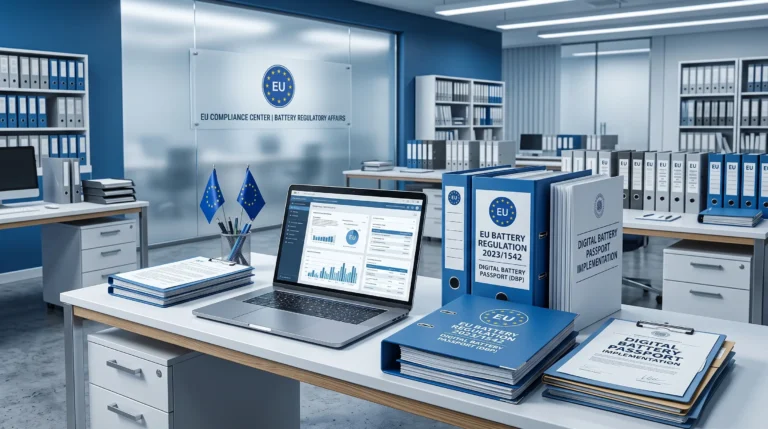
The EU Battery Regulation is now in full effect. By August 18, 2026, battery carbon footprint performance labels become mandatory for EU market access. By February 18, 2027, the digital battery passport goes into effect — requiring about 90 mandatory data attributes for every industrial battery placed on the EU market.
These regulations are accelerating the replacement of legacy energy storage systems (often lead-acid or early-generation NMC) with modern LiFePO₄ solutions that can provide the required documentation.
In China, the “New Power System” 15th Five-Year Plan was released on August 3, 2026, explicitly targeting grid modernization and energy storage expansion.
Internal link: View Runing Power’s certifications and compliance documentation →
2. The Pipeline Is Real
From large-scale projects in the US to grid storage in the Middle East to commercial ESS across Europe, the project pipeline is substantial. This isn’t speculative demand — it’s contracts and deliveries.
3. The Supply Chain Is Responding
In August 2026, six major battery companies reported combined production of 198.7 GWh, up 70% year-over-year and 9% month-over-month. The battery industry is scaling fast to meet storage demand.
What This Means for Industrial Battery Buyers
If you’re sourcing batteries for AGV fleets, golf carts, or energy storage systems, here’s what to watch:
1. LiFePO₄ Prices Are Likely to Become More Competitive
As storage scales, LFP production volumes increase, which should gradually reduce costs across the board. BloombergNEF forecasts battery pack prices to reach $105/kWh in 2026 — down from $108/kWh in 2025.
2. Supply Chains Are Tightening, but Capacity Is Expanding
The industry is in a transitional phase — demand is rising fast, and suppliers are investing heavily in new production lines. August 2026 lithium carbonate production is expected to reach approximately 112,600 tons, up 7.03% month-over-month and 32.07% year-over-year.
3. Compliance Is Becoming a Competitive Differentiator
Suppliers that can provide carbon footprint data, digital battery passport information, and EU-compliant documentation will have a significant advantage in the market. The EU is moving from “product compliance” to “data compliance” — requiring full lifecycle traceability.
4. The Market Is Moving Fast
The 2026 global lithium battery output forecast was raised by 200 GWh in a single revision. Buyers should plan for potential supply constraints in the short term as the industry races to keep up with demand.
Internal link: Contact Runing Power for procurement guidance →
External reference: UN38.3 transport safety standard (dofollow)
The Bottom Line
The lithium battery industry is no longer the EV industry.
Energy storage has arrived as the second major pillar — and in 2026, it’s growing faster. The 200 GWh upward revision to the annual forecast wasn’t driven by EVs. It was driven by grid storage, commercial ESS, and the global push for energy resilience.
For industrial buyers, this is good news. More demand means more production, which means better technology, more competitive pricing, and more supply options over the medium term.
The challenge is getting through the transition — understanding the new regulatory landscape, finding suppliers who can deliver compliance-ready products, and timing your procurement decisions to avoid supply tightness.
2026 is the year the battery industry rewrites its growth story.

Ready to Navigate the 2026 Battery Market?
Our engineering and procurement team can help you understand the latest market trends, regulatory requirements, and supply options for your industrial battery needs.
Hello
Please enter your email address to subscribe.