Whatsapp: +86 15001050898 Email : collin@runingpower.com / daisy@runingpower.com


The 2026 Battery Industry Shift: Storage, AI, and What It Means for Industrial Users
If you follow the battery industry at all, you’ve probably noticed that something has changed in 2026.
It’s not just that the market is growing—it’s that the shape of the market is changing. New applications are emerging. Old assumptions about cost and performance are being tested. And for industrial battery users—whether you’re running an AGV fleet, managing a cold storage facility, or deploying energy storage—these shifts matter.
Here’s what’s happening, and what it means for you.

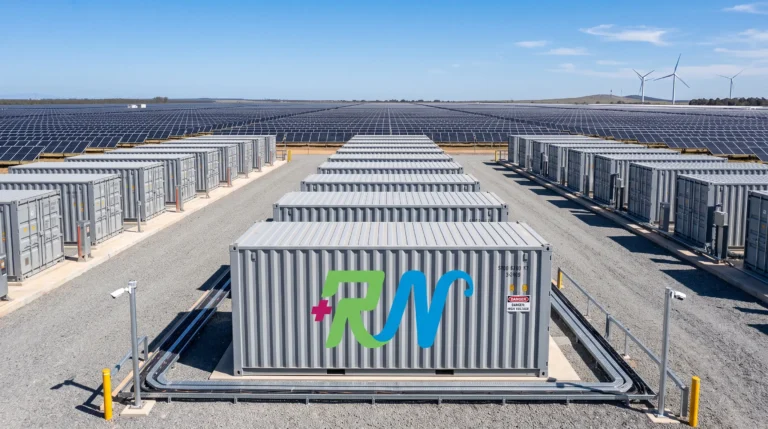
The Storage Explosion: A Market Unlike Anything We’ve Seen
Let’s start with the numbers, because they’re genuinely remarkable.
In the first half of 2026, China’s lithium-ion battery production increased by 39.3% year-over-year. Energy storage battery shipments grew by over 80%. And globally, energy storage battery shipments are projected to reach 897 GWh in 2026, up from 612 GWh in 2025.
If those numbers feel abstract, consider this: one battery manufacturer in Huizhou saw its energy storage orders increase by 30x in the first half of the year. On the day reporters visited, the company received an emergency order worth over 100 million yuan—8,000+ battery packs that needed to be delivered immediately.
Why the sudden surge? Three factors are converging:
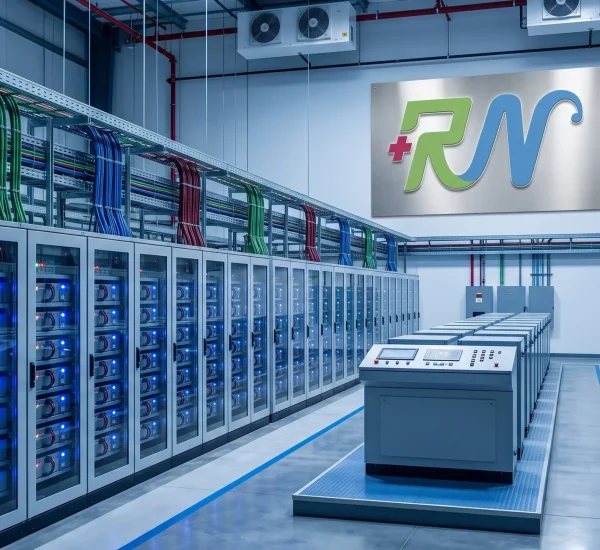
First, energy storage has become critical infrastructure for AI data centers. Large language model training and inference consume enormous amounts of electricity—and they’re extremely sensitive to grid fluctuations. A brief power interruption can interrupt training runs or damage expensive hardware. Energy storage systems with millisecond-level response have become a must-have for data center operators.
Second, the global energy storage market is hitting an inflection point. The EU signed an agreement in June aiming to add about 45 GW of energy storage capacity within three years, targeting 200 GW by 2030. In the US, storage installations continue to accelerate. And in China, a government target of 300 GW of new energy storage by 2030—up from 136 GW at the end of 2025—means the runway is long.
Third, the supply chain is tightening. Global energy storage battery inventory has dropped for 13 consecutive months, from 55.1 GWh in May 2025 to 28.5 GWh in June 2026. Demand is pulling inventory down, which has meaningful implications for pricing.
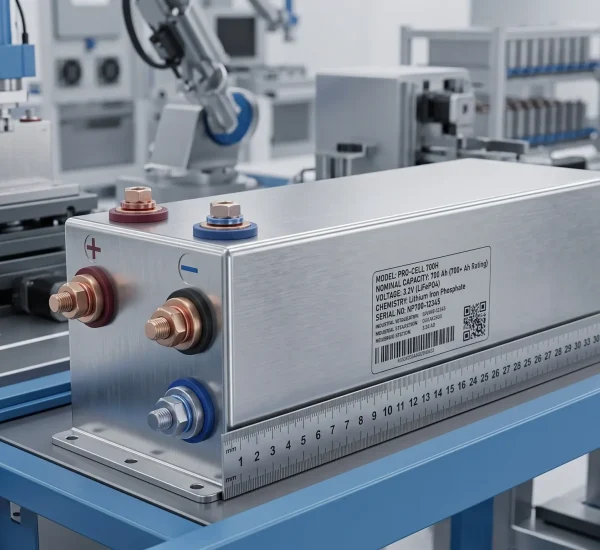
Bigger Cells, Better Economics
One of the most significant technical trends in 2026 is the rapid shift toward larger-format battery cells.
Industry consensus just a year ago was that the market would gradually move from 280 Ah cells to 314/315 Ah, and eventually to 500+ Ah. But 2026 has accelerated that timeline considerably. 700+ Ah cells are now landing real orders in high-end applications.
In mid-July, Envision Energy‘s Yichang plant began production of the world’s largest prismatic wound battery cell: 790 Ah. More than half of its initial production capacity was already locked in by overseas customers before the first cell shipped.
Why does this matter for industrial users?
Larger cells mean fewer cells per system—which means fewer connections, lower assembly costs, and better reliability. A 790 Ah cell stores more than 2.5 kWh of energy and offers a cycle life exceeding 12,000 cycles. For applications like grid-scale storage or industrial peak shaving, this translates directly to lower lifetime costs.
The shift is also showing up in procurement. State-owned enterprises in China have started creating separate bidding categories for 450+ Ah and 500+ Ah cells. What was once a differentiator is becoming the standard.
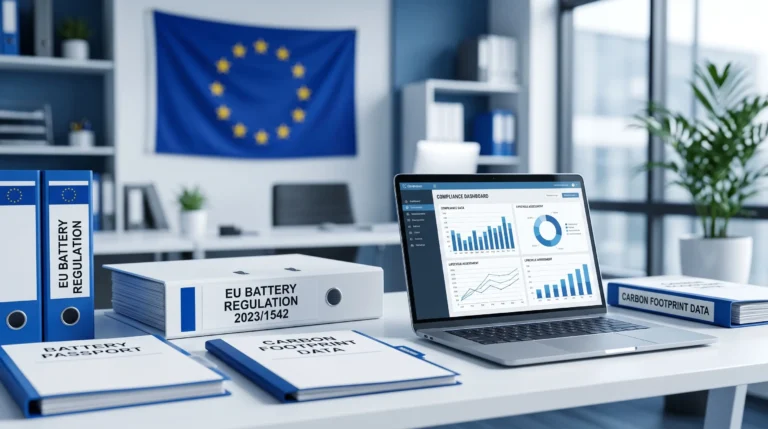
The Rules Are Changing: Compliance Is Now Competitive
If you export batteries—or products that contain them—to Europe or the US, the regulatory landscape has fundamentally shifted in 2026.
The EU Battery Regulation is now in full effect. Batteries exported to the EU must meet carbon footprint disclosure requirements, and starting August 2026, exported batteries must display carbon footprint performance labels. By February 2027, every battery placed on the EU market will need a digital battery passport containing about 90 mandatory data points—covering everything from raw material sourcing to recycled content.
This isn’t optional compliance. It’s a market access requirement.
The EU has also set ambitious recycling targets: by 2027, lithium recovery rates must reach 50%, with cobalt, copper, lead, and nickel at 90%. By 2031, those targets rise to 80% for lithium and 95% for the other metals. For industrial battery users, this means your suppliers will increasingly need to demonstrate where materials came from and where they’ll go at end of life.
Meanwhile, battery taxes are changing. Starting September 2026, lithium-ion batteries in China will be subject to a 2% consumption tax, increasing to 4% in September 2027—though next-generation chemistries like solid-state and sodium-ion batteries are exempt through 2028.
The takeaway: compliance capability is becoming a competitive differentiator. Suppliers who can document carbon footprints, provide battery passport data, and demonstrate responsible sourcing will have an edge.
What This Means for Industrial Battery Users
If you’re managing an AGV fleet, running a cold storage facility, or deploying industrial energy storage, here are the practical implications:
1. LiFePO₄ remains the workhorse. Phosphate-based batteries now hold more than 95% of the energy storage market. For good reason—they’re safe, durable, and cost-effective. The LiFePO₄ battery market is projected to reach $21.14 billion in 2026 and grow to $32.92 billion by 2032 at a 7.59% CAGR. This isn’t a niche technology; it’s the mainstream choice for industrial applications.
2. Larger cells are coming to more applications. The trend toward 500+ Ah and 700+ Ah cells is currently most visible in grid storage, but the cost and reliability benefits will gradually apply to other segments. If you’re specifying batteries for a new project, it’s worth asking your supplier about their roadmap for larger-format cells.
3. Compliance costs are real—and they’re here to stay. The EU requirements aren’t going away. If you’re sourcing batteries from China (and most industrial batteries are), expect your suppliers to invest in compliance infrastructure. This may affect pricing in the short term, but it also means more transparency about battery materials and lifecycle performance.
4. The market is tightening. With inventory dropping and demand rising, pricing pressure is building. Industrial buyers should plan for potential price increases and consider locking in supply agreements sooner rather than later.

A Final Note: From Scale to Sophistication
China’s battery industry has crossed the ¥2 trillion mark. The era of simply building bigger factories and driving down costs is over. The next phase of competition will be about technology, compliance, and service.
For industrial users, that’s good news. It means better products, more transparency, and suppliers who are increasingly focused on long-term performance rather than short-term price.
The battery market of 2026 looks different from the market of 2024. And if the trends we’re seeing hold, the market of 2028 will look different still.
The question isn’t whether your operation will be affected—it’s whether you’re ready for what’s coming.
Hello
Please enter your email address to subscribe.