Whatsapp: +86 15001050898 Email : collin@runingpower.com / daisy@runingpower.com


How to Choose the Right LiFePO₄ Battery for AGV: Voltage, Capacity, and Communication Guide
Automated guided vehicles (AGVs) are the backbone of modern logistics and manufacturing. But even the most advanced AGV is only as reliable as the battery that powers it.
Choosing the wrong battery means frequent swaps, unexpected downtime, and costly replacements. Choosing the right one means 24/7 uptime, lower operating costs, and years of trouble‑free service.
This guide walks you through the three most critical decisions when selecting a LiFePO₄ battery for your AGV fleet—voltage, capacity, and communication protocol—so you can make an informed choice that keeps your operation running.
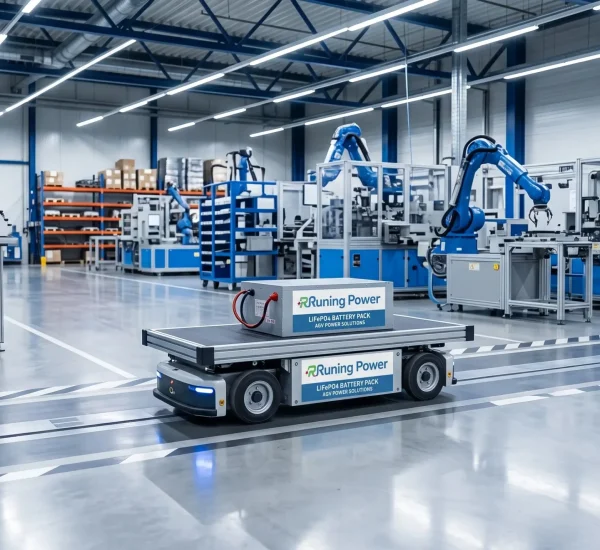

Why AGV Lithium Battery Demand Is Accelerating
The numbers tell a clear story. The global market for AGV and AMR lithium batteries was estimated at US$ 1,326 million in 2025 and is projected to reach US$ 3,549 million by 2032, growing at a compound annual rate of 15.1%.
What’s driving this growth? Three factors stand out:
- First, the accelerated replacement of lead‑acid batteries in existing AGV fleets. Fleet operators are realizing that the lower upfront cost of lead‑acid doesn’t compensate for its shorter lifespan and higher maintenance burden.
- Second, the increasing penetration of automation across manufacturing, warehousing, and logistics. More AGVs mean more batteries—and more demand for batteries that can keep up with 24/7 operations.
- Third, the growing demand for localized battery solutions in overseas markets, as manufacturers seek to shorten supply chains and improve service responsiveness.
The trend is clear: lithium is becoming the default choice for AGV power, and LiFePO₄ is leading the charge.
🔗 External authority: UN38.3 transport safety standard | IATA Dangerous Goods Regulations
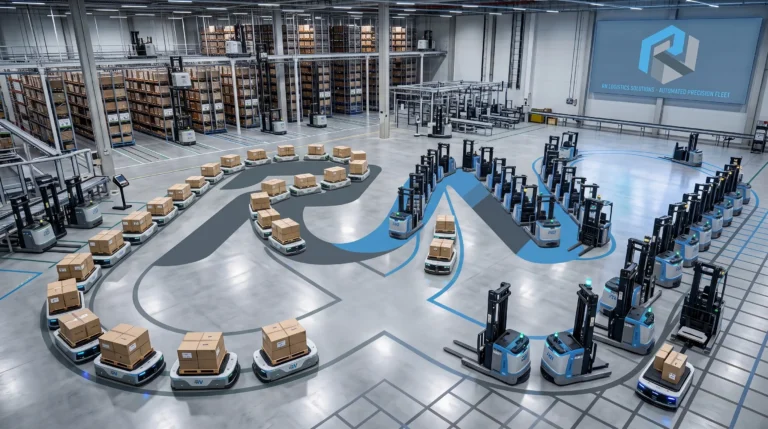
The Three Critical Decisions
Voltage: Matching Your AGV's Power Architecture
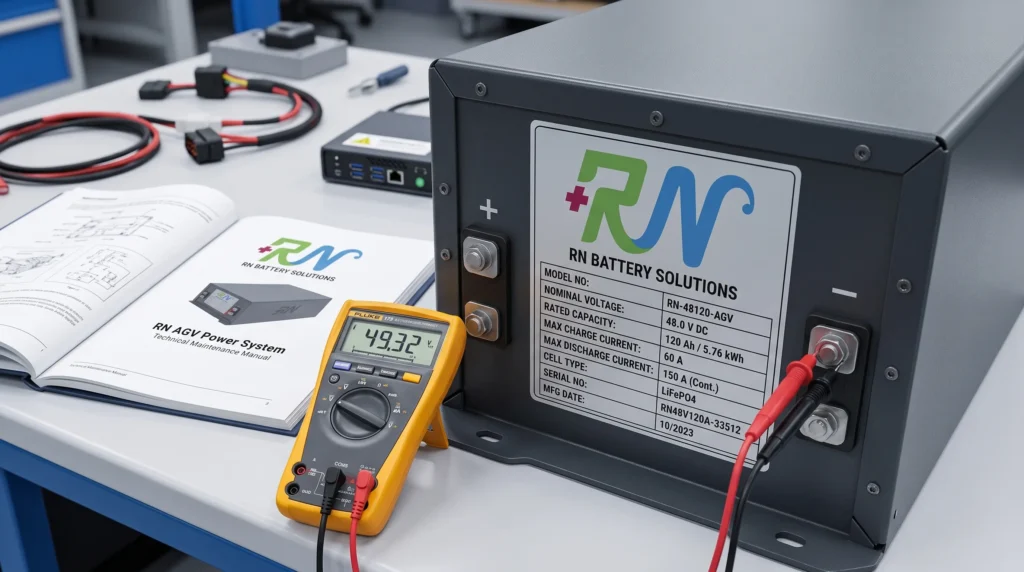
Voltage is where it all starts. Your AGV’s motor controllers, sensors, and onboard systems are designed around a specific voltage platform—typically 24V, 48V, or higher for heavy‑duty applications.
Why it matters: Using a battery with the wrong nominal voltage can damage sensitive electronics or cause the AGV to underperform. A 48V system expects a 48V battery—not 51.2V, not 36V.
What to look for: Match the battery’s nominal voltage to your AGV’s system voltage. Common configurations include 24V for smaller AGVs and 48V for standard industrial applications. For high‑power or heavy‑load AGVs, some manufacturers offer 72V or even higher voltage platforms.
Pro tip: If your AGV operates in cold storage environments, pay close attention to voltage stability at low temperatures. Some batteries experience significant voltage sag as temperatures drop, which can trigger low‑voltage cutoffs prematurely.
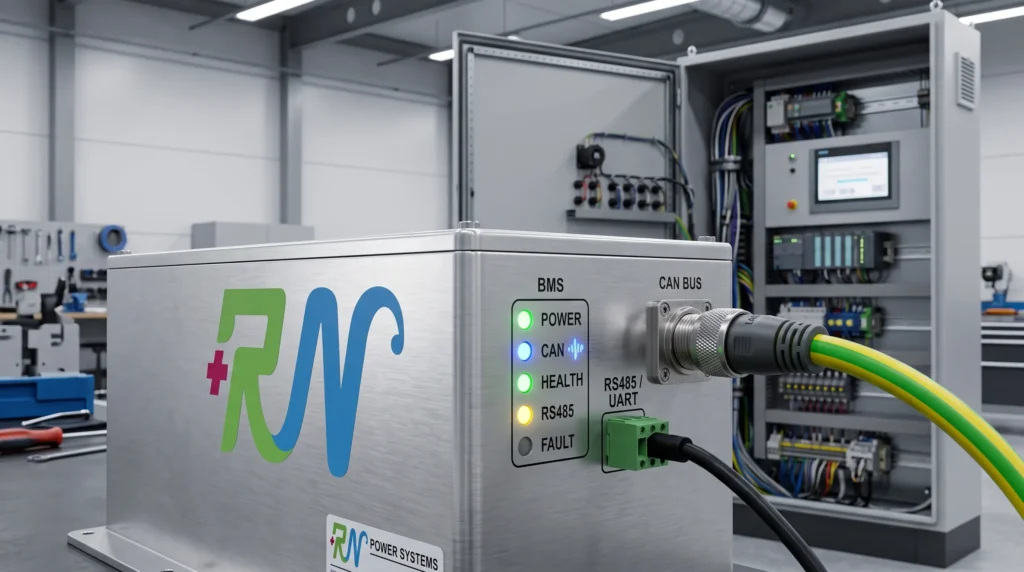
This is where many AGV integrations fail. The battery’s Battery Management System (BMS) needs to communicate with the AGV’s controller to share critical data—state of charge, temperature, fault status, and health alerts.
Why it matters: Without proper communication, your AGV can’t accurately predict remaining runtime, may shut down unexpectedly, or fail to alert operators to developing issues.
What to look for: Most industrial AGV controllers support one or more of these protocols:
- CAN bus (CANopen/J1939): The preferred protocol for most AGV and AMR projects. High‑speed, deterministic communication with collision detection—ideal for real‑time control.
- RS485 (Modbus RTU): Cost‑effective, long‑distance communication for legacy systems and larger AGVs.
- Analog output (0–5V / 4–20mA): Basic monitoring for simpler integrations.
Pro tip: If you’re upgrading an existing AGV fleet, check what protocol your current batteries use and ensure the new batteries support it. A mismatch can turn a simple battery swap into a weeks‑long integration project.
The BMS advantage: A smart BMS does more than just communicate. Advanced coulomb counting algorithms can deliver SOC accuracy above 95%, and dual‑channel redundancy for safety‑critical signals adds an extra layer of reliability.
Communication Protocol: Ensuring Your AGV and Battery Speak the Same Language
Capacity: Balancing Runtime with Weight and Space
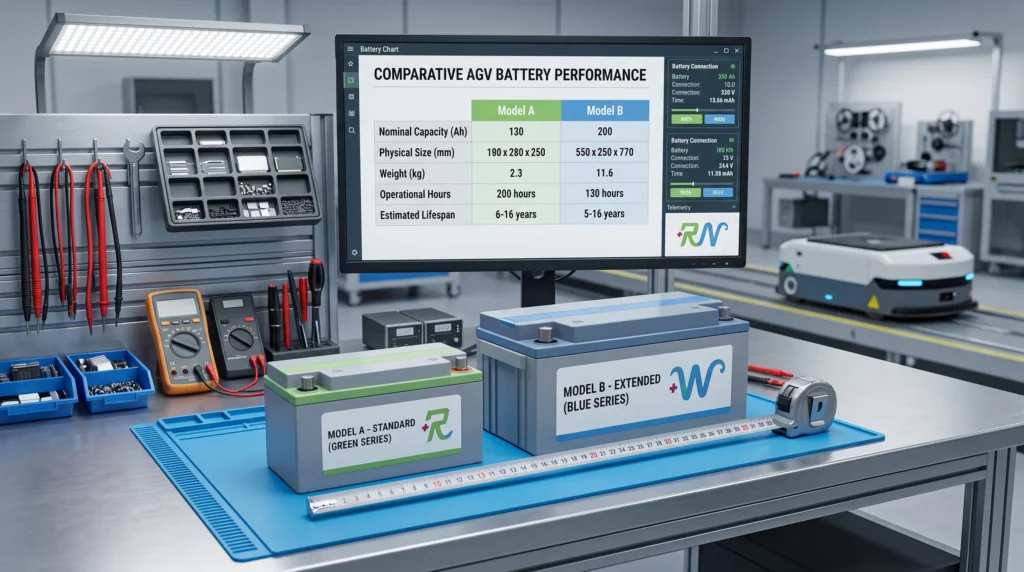
Capacity—measured in ampere‑hours (Ah)—determines how long your AGV can run between charges. But bigger isn’t always better.
Why it matters: An undersized battery forces frequent swaps or opportunity charging, disrupting workflow. An oversized battery adds unnecessary weight, reducing payload capacity and increasing energy consumption.
What to look for: Calculate your AGV’s average and peak power consumption, then match capacity to your shift duration plus a safety margin. Runing Power offers configurations ranging from 28Ah to 100Ah and beyond.
The cold storage factor: In freezer environments below 0°C, standard lithium batteries lose 20–40% of their rated capacity. At -20°C, a battery rated for 8 hours at room temperature may deliver only 3–4 hours of usable runtime. If your AGVs operate in cold storage, factor this into your capacity calculation—or choose a battery specifically engineered for low‑temperature performance.
Beyond the Basics: What Else Matters

Cycle Life and Total Cost of Ownership
LiFePO₄ batteries typically deliver >2,000 cycles at 80% depth of discharge—four to six times longer than lead‑acid batteries. In daily fleet service, that translates to 5–7 years of reliable operation.
When comparing total cost of ownership (TCO), don’t just look at the purchase price. Factor in:
- Maintenance costs (lead‑acid requires weekly watering, equalization, and terminal cleaning; LiFePO₄ requires none)
- Replacement frequency
- Labor costs for battery swaps
- Charging efficiency losses
LiFePO₄ wins on almost every metric—especially for AGVs that must run many hours per day.
Internal link: View our full AGV battery portfolio →
Opportunity Charging
Many AGV fleets use a strategy called opportunity charging—adding power during short stops, loading/unloading, or idle periods.
LiFePO₄ batteries support this with minimal impact on lifespan, unlike lead‑acid batteries that suffer from sulfation. If your operation relies on opportunity charging, lithium isn’t just a nice‑to‑have—it’s operationally essential.
Environmental Conditions
Consider where your AGVs operate:
- Cold storage and freezer warehouses: Choose batteries with proven low‑temperature performance. Look for models that maintain reliable discharge at -20°C and below, with self‑heating BMS technology that activates when temperatures drop below safe thresholds. Learn about cold chain solutions →
- High‑vibration environments: Metal casing with shock‑absorbing cell mounting is essential for durability.
- Washdown areas: Look for IP65 or higher sealing to resist moisture ingress.
Putting It All Together: A Decision Framework
| Decision Point | What to Consider | Why It Matters |
|---|---|---|
| Voltage | Match your AGV’s system voltage (24V, 48V, 72V, etc.) | Prevents compatibility issues and protects electronics |
| Capacity | Calculate runtime needs + cold storage derating + safety margin | Avoids unnecessary swaps and extends useful life |
| Communication | CAN bus (preferred), RS485, or analog | Ensures AGV and BMS exchange critical data reliably |
| Cycle Life | >2,000 cycles @80% DOD | 4–6× longer than lead‑acid, lower TCO |
| Temperature | Standard (-20°C to +60°C) or low‑temperature (-35°C) | Prevents premature failure in freezer environments |
| Casing | Metal with gasket‑sealed lids, IP65 option | Withstands vibration and harsh industrial conditions |
Real‑World Results
The numbers look good on paper—but what about real deployments?
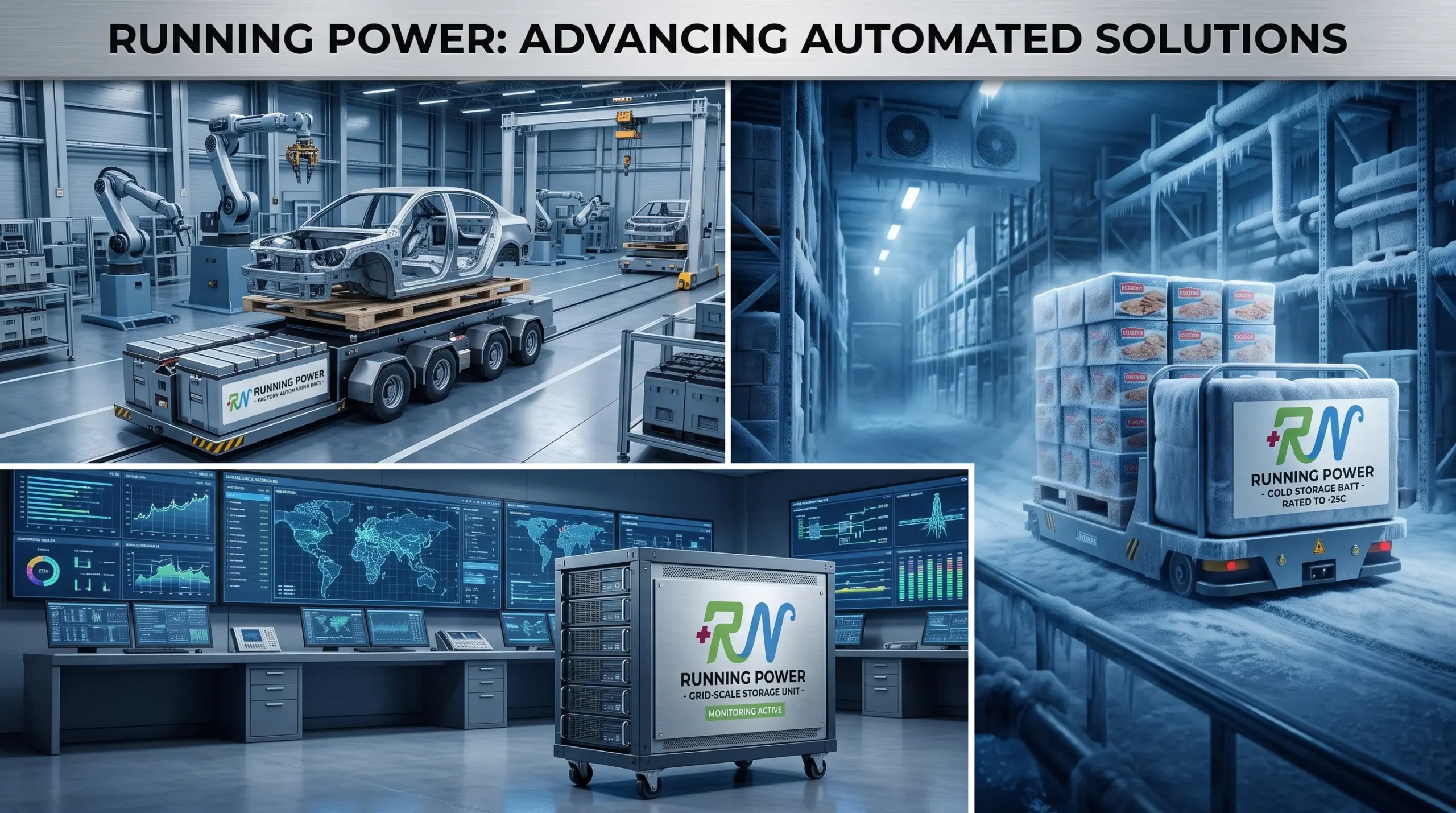
Automotive factory AGV fleet: 30 AGVs upgraded to 48V 40Ah high‑rate LiFePO₄ batteries with CAN bus. Battery life extended to 3+ years. AGV productivity increased 15%. Read full case →
German cold storage AGV fleet: 20 AGVs operating at -25°C with 24V 80Ah low‑temperature batteries. Achieved 99.5% uptime over two winter seasons. Maintenance cost reduced 60%. Read full case →
State Grid power monitoring: Custom 48V 100Ah batteries with remote monitoring. 5+ years strategic cooperation. Zero safety
The Bottom Line
Choosing the right LiFePO₄ battery for your AGV fleet comes down to three core decisions—voltage, capacity, and communication protocol—plus careful consideration of your operating environment and duty cycle.
Get these right, and you’ll have a battery that keeps your AGVs moving for years with minimal maintenance and predictable performance. Get them wrong, and you’ll be dealing with integration headaches, unexpected downtime, and premature replacements.
Ready to Power Your AGV Fleet?
Tell us your voltage, capacity, and communication requirements — we’ll design an AGV battery solution that keeps your automated operations running 24/7.

Hello
Please enter your email address to subscribe.