Whatsapp: +86 15001050898 Email : collin@runingpower.com / daisy@runingpower.com


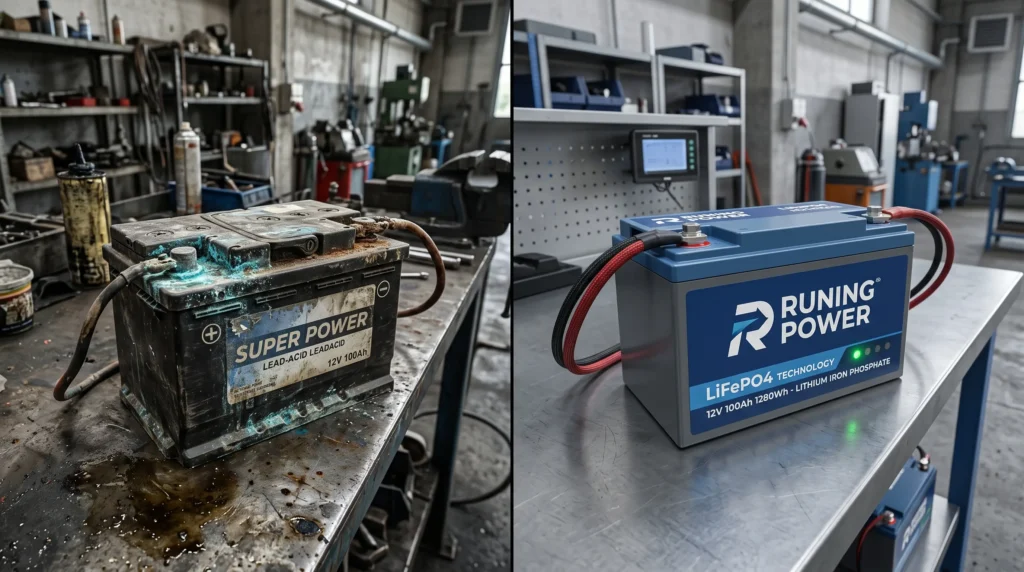
LiFePO₄ vs. Lead-Acid: The Real TCO Story for Golf Carts and Forklifts (2026 Data)
Let’s start with something that might surprise you.
A typical lead-acid battery for a 48V golf cart costs $800 to $1,500 upfront. A lithium replacement costs $1,500 to $4,000. On day one, lead-acid looks like the obvious choice — about half the price for what seems like the same job.
But fleet managers who only look at the sticker price are making a costly mistake. Here’s why.

The Numbers That Matter
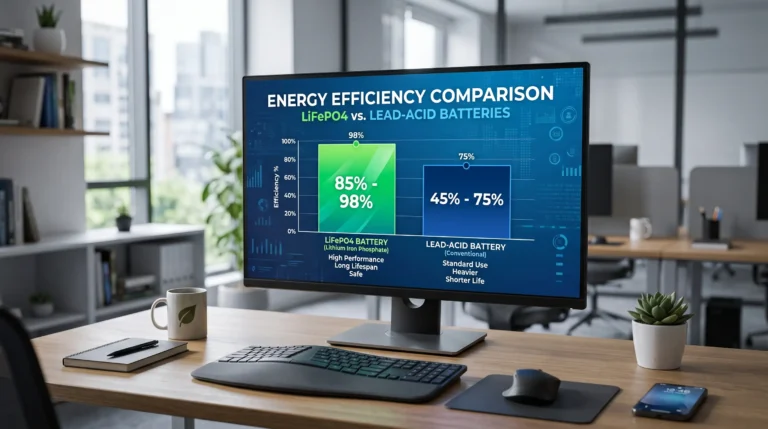
Let’s cut through the marketing and look at the actual data. A 2026 academic review comparing lead-acid and lithium-ion batteries found that lithium-ion delivers 85%–98% energy efficiency versus 45%–75% for lead-acid, with cycle life ranging from 1,000 to 6,000 cycles compared to just 300 to 500 cycles for lead-acid. That’s not a small difference — it’s a fundamental gap in performance that compounds over years of operation.
Cost per cycle is where the story flips. In 2026, a LiFePO₄ battery priced at $400/kWh delivering 5,000 cycles costs just $0.08 per kWh-cycle. A lead-acid battery priced at $200/kWh delivering only 1,000 cycles costs $0.20 per kWh-cycle. In other words, lithium costs less than half as much per cycle — even with a higher sticker price.
External reference: Energy efficiency and cycle life comparison — ScienceDirect

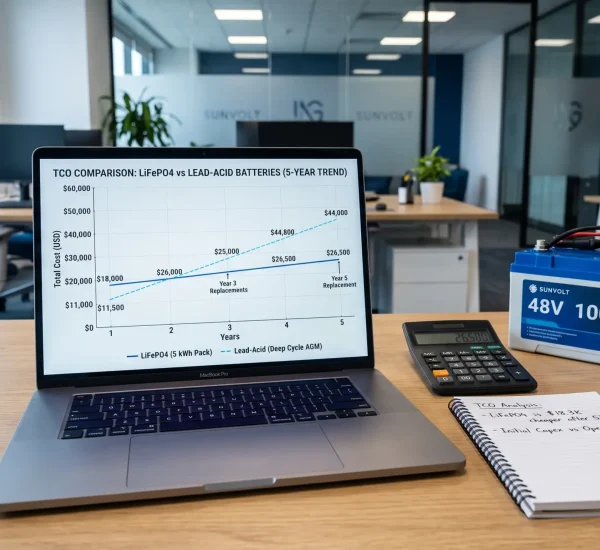
The Comparison That Matters: 5-Year Total Cost of Ownership
Here’s where the real math comes in.
For industrial fleets, the 5-year Total Cost of Ownership (TCO) comparison tells a completely different story from the initial purchase price. Multiple industry analyses in 2026 show that while LiFePO₄ batteries have 2–3× higher upfront costs, their total cost of ownership is 30–50% lower over 5 years.
| Cost Factor | Lead-Acid | LiFePO₄ | Savings |
|---|---|---|---|
| Initial Purchase (48V pack) | $1,200–$1,800 | $2,000–$4,000 | — |
| Replacement Frequency | Every 2–4 years | Every 8–10+ years | 2–4× fewer replacements |
| Maintenance Labor (5 yrs) | $6,000+/year per forklift | $0 | 100% elimination |
| Charge Efficiency | 45–75% | 85–98% | 22% lower electricity cost |
| 5-Year Total | Higher | 30–50% lower | $10,000+ per vehicle |
The bottom line: One major analysis found that a LiFePO₄ forklift battery can deliver $10,095 in savings over 5 years compared to lead-acid. For a fleet of 20 forklifts, that’s over $200,000 in savings.
Internal link: Explore Runing Power’s golf cart battery solutions →

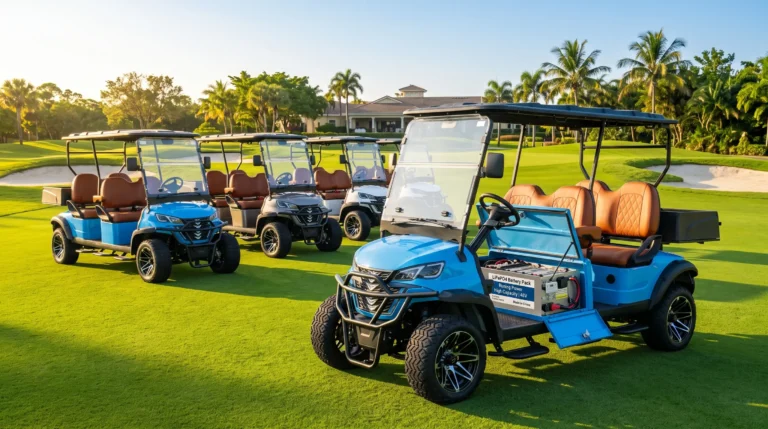
Golf Cart Fleets: The Real-World Math
Golf course and resort operators are increasingly doing the math — and the math favors lithium.
A typical 48V lead-acid golf cart pack costs $800 to $1,500 and needs replacement every 2 to 4 years. Over a 10-year fleet lifecycle, that means 2 to 4 complete replacements per cart.
A lithium pack costs $1,500 to $4,000 upfront but lasts 8 to 10+ years. That’s one purchase per cart over the same period, not three or four.
One real-world example: a 70-cart fleet switching from lead-acid to lithium saved approximately $187,000 over 10 years in combined battery replacement, electricity, and labor costs.
Per cart, that’s nearly $2,700 in savings — enough to pay for the lithium upgrade and then some. The numbers are even more compelling for coastal resorts, where lithium’s corrosion resistance and zero maintenance deliver significantly higher ROI than traditional lead-acid fleet carts.
For fleet operators, the numbers are even clearer. An analysis comparing a fleet of 20 × 48V golf carts found that the TCO of lead-acid becomes substantially higher than lithium over the full lifecycle.
Internal link: Learn about Runing Power’s golf fleet solutions →
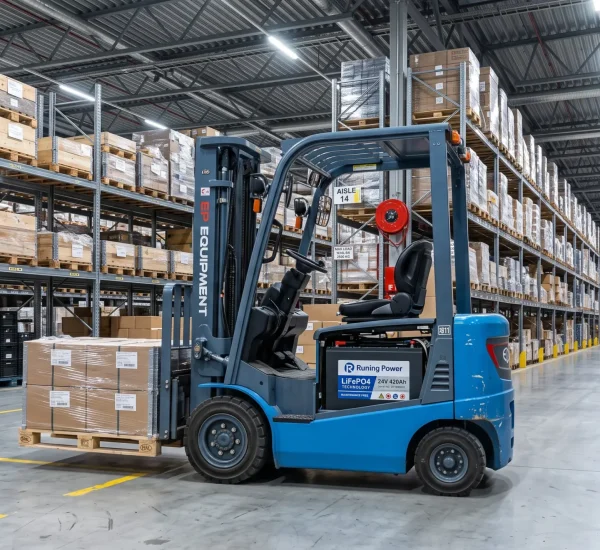
Forklifts: Multi-Shift Operations Change Everything
The forklift use case is where lithium’s advantage becomes undeniable. Here’s why.
Multi-shift operations are the killer app for lithium. Lead-acid batteries take 8+ hours to charge and require cooling time, forcing multi-shift operations to maintain expensive battery change-out systems and spare battery inventories.
Lithium batteries can be opportunity charged during breaks — 1 to 2 hours of charging during lunch or shift changes provides enough power to finish the day. This eliminates the need for:
- Battery change-out rooms
- Spare battery inventories (1 battery per forklift, not 3)
- Watering stations
- Acid spill containment systems
The math is striking. One analysis found that for a multi-shift operation, lithium saves $12,500 per forklift over 5 years. Another study calculated net savings of $15,100 per forklift over 5 years — for a fleet of 20 forklifts, that’s $302,000 in bottom-line impact.
Even on the labor side, the numbers are eye-opening: one analysis estimated that over a 5-year asset life, a facility would spend $42,900 just on watering labor for lead-acid batteries. Lithium requires zero watering. Zero acid spills. Zero labor cost.
Internal link: View AGV & robotics battery solutions →
The 2026 Market Context
Several factors make 2026 a critical year for this decision:
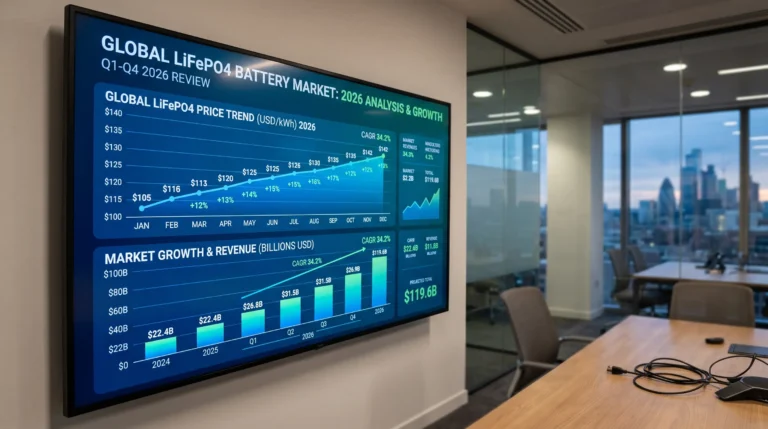
- Lithium prices are stabilizing. BloombergNEF forecasts battery pack prices to reach $105/kWh in 2026 — down from $108/kWh in 2025.
- Lead-acid is becoming less viable. The industry is undergoing a structural shift from flooded lead-acid dominance toward lithium iron phosphate adoption, driven by TCO advantages and fleet uptime requirements.
- Regulatory pressure is mounting. Environmental regulations on lead handling and recycling are tightening across multiple markets, making lead-acid more expensive to own and dispose of.
- Energy costs matter. Lithium’s 85–98% charge efficiency vs. lead-acid’s 45–75% translates directly to lower electricity bills — roughly 22% lower kWh costs.
External reference: BloombergNEF 2026 Battery Price Forecast

What This Means for Your Decision
If you own a single cart or forklift with light use, lead-acid might still make sense. The lower upfront cost and lower cycle count mean the math doesn’t always favor lithium for weekend warriors.
If you manage a fleet — golf course, resort, warehouse, or manufacturing facility — the math overwhelmingly favors lithium. The combination of:
- 4–10× longer lifespan
- Zero maintenance labor
- 22% lower electricity costs
- No replacement cycles
- Opportunity charging capability
…delivers 30–50% lower TCO over 5 years.
If you operate multi-shift, lithium isn’t just better — it’s operationally essential. The ability to opportunity charge during breaks eliminates the logistics nightmare of battery change-outs and spare battery inventories.
The Bottom Line
2026 is the year the TCO math finally clicks for most fleet operators.
The upfront price gap between lithium and lead-acid is shrinking — not because lithium is getting much cheaper, but because the total cost of owning lead-acid is becoming impossible to ignore. When you factor in replacement frequency, maintenance labor, energy efficiency, and downtime costs, lithium saves $10,000+ per vehicle over 5 years in most fleet applications.
The question isn’t whether lithium is worth the upgrade. The question is: can you afford not to make the switch?

Ready to Run the Numbers for Your Fleet?
Contact our engineering team for a customized TCO analysis based on your specific operation — fleet size, shift schedule, and application type.
Explore more: Golf Cart Batteries · AGV Batteries · Energy Storage · Custom Battery · AGV Solutions · Cold Chain Solutions
Hello
Please enter your email address to subscribe.